Saturday, November 15, 2014

Torah Thoughts on Chayei Sarah


This week’s Torah portion, Chayei Sarah, (Gen 23:1-25:18) includes the choosing of Rebecca as a wife for Isaac and their meeting, but not in the expected order.  At the beginning of the portion, we learn of Sarah’s death, and after Abraham buys a burial place for her and mourns her, he turns his energies to finding a wife for his son Isaac.  He sends his servant back to his birthplace so that Isaac will marry a woman of Abraham’s own people.  The servant prays to God that he will find the right woman for his master’s son, and devises a test.  He will go to the well, and the first woman who offers to water his camels will be the one that God has chosen.   What follows is according to plan; Rebecca turns out to be the granddaughter of Abraham’s brother Nahor and she is eager to go with him and be the mistress of a prosperous and large homestead.  What was not expected was the love that would grow between Isaac and Rebecca.

In The Torah: A Woman’s Commentary, Professor Tamara Eskenazi points out that Isaac’s love for Rebecca is the first mention of spousal love in the Torah.  Although Isaac took no active role in the search for his bride, he is smitten when she arrives. “Isaac brought her into the tent of his mother Sarah, he took Rebecca and she became his wife and he loved her” (Gen. 24:67).  Rebecca’s reaction to their meeting is more visceral.  When she and the servant arrive at their destination, she sees Isaac coming to meet them and asks the servant, “Who is this man coming to meet us?” When the servant responds, “He is my master”, Rebecca simply falls off her camel.  Recovering herself, she takes a veil and goes to meet him.  Isaac is the only one of the patriarchs who is monogamous.  Rebecca is all that he needs.

Saturday, November 8, 2014

Torah Thoughts on Vayera


In this week’s Torah portion, Vayera (Gen. 18:1-22:24) three angels of God come to bring news to Abraham and Sarah.  Even at their advanced age, the messengers tell them, Sarah would bear Abraham a son in the coming year.  This news causes Sarah to laugh with a mixture of wonder, disbelief and joy, and when the child is born the following year, he is called “Yitzchak”, “Isaac” meaning “he shall laugh”.  

But of course Abraham already has a son, Ishmael, born to his concubine Hagar.  Sarah had urged Abraham to impregnate Hagar, thinking she herself would never bear a child.  But now that Sarah has a son, she sees the older boy as a threat to her and to her son.  She demands that Abraham put Hagar and Ishmael out of the household.  Abraham is deeply grieved at this, but when God tells him to heed Sarah’s bidding, he does so.  He puts Hagar and Ishmael out in the wilderness with a loaf of bread and a skin of water.  When the food and water are gone, Hagar, seeing only death as a future for her and the child, puts him under a bush so she doesn’t have to watch him die.  Then an angel comes to her to tell her that the child will grow up and found a great nation.  With this in mind, Hagar lifts up her eyes and sees a well of water.  She fills the skin with water and gives it to the boy to drink.  In the very next sentence, we learn that the boy has grown up, married and become a bowman.

The well that Hagar saw did not appear by magic.  It was there all the time, but in her despair she could not see it.  It was only when she lifted up her eyes that she was able to find the means to her and the boy’s salvation.  The same is true for all of us.  When we think there is no way out, sometimes all we need to do is lift up our eyes.

Tuesday, November 4, 2014

I'm New To The Seasons

From the Huffington Post:

http://www.huffingtonpost.com/mary-walker-baron/im-new-to-the-seasons_b_6096324.html

After living in Southern California for most of my adult life, I moved to New Jersey. Unusually deep snow, ice, and record-breaking low temperatures greeted my arrival. I became familiar with the term "polar vortex." Looking back over the past several months I am beginning to consider that the unusually cold, wet, frozen weather had little if anything to do with my arrival. Nevertheless, I became a student of the seasons just in case it really was all about me. I've recently determined that seasons are essential.
Okay. So any meteorologist could have told you that. Except, just for the record, the "most of my adult life" lived in Southern California consisted of quite a few years. If there are noticeable seasons in that part of the world, their arrivals and departures are beyond subtle. A dear friend and East Coast ex-patriot once observed that California had two seasons -- night and day.
Beyond the meteorological significance of seasons, I now believe they are essential for other reasons. No offense to all who love the sameness of Southern California, but that sameness, in my opinion, can become dangerous. Because of it we are lulled into a belief that change doesn't happen. We maintain our homes and our offices at comfortable temperatures. We walk from them to our automobiles, which we also maintain at comfortable temperatures. We only remark on the weather if we happen to be outside. Outside is only the place to go to do something impossible to do inside or to rush through on our way to some other inside. During those outside experiences our most frequent remark is a complaint about the heat because rarely do we need even a sweater in that land of eternal youth and good looks. Eventually, it seems to me, we forget that our time to complain about or experience weather is fragile and finite. We become oblivious to the passing of time and thus oblivious to the passing of our own time.
Here on the East Coast autumn dazzles the senses with leaves in constant, colorful change. Soon the deciduous trees will be leafless and bare. Winter will come again with its ice and snow and cold. In my "new to the seasons" worldview, it seems to me that each season has its own rhythm and urgency and purpose. Autumn (aka "fall") seems to be a season of preparation. There is an inevitable urgency as life prepares for winter: roads repaired. Construction hurried toward completion. Gardens mulched. Coats brought from storage to closets or coat racks. Winter will come in its own time but just knowing it's on its way compels us to prepare for the weeks of hunkering down. Even leaving home for work or life sustaining errands requires a hunkering down in those harsh weeks. Winter bends us over and forces us to consider each footstep lest we slip on ice or sink knee deep into a drift. Just when we worry that winter will never end we witness the first snow crocus bravely pushing its goblet-shaped head through the snow and we know beyond a shadow of a doubt that miracles even in this day and age do happen. And summer forces us outside. Hiking paths and parks and beaches fill with people rejoicing in sunshine and heat thrilled over having survived another winter until once again the leaves begin to change their colors and we know the cycle will repeat. Thus we mark and cherish and glory in the days of our lives fully aware of their seasons.
Of course, I'm new to seasons. They still seem miraculous to me as they offer compelling life lessons. I'm hoping they remain reminders of my many life miracles instead of becoming just another thing about which I complain or worse yet fail to notice.
Living with intentional awareness requires attention. I've got to stay alert for falling leaves, icy paths, brave blossoms, rising temperatures and precious moments.

2014-11-03-photo58.JPG

I Voted

Today, I voted for the first time in the state of New Jersey.  It was a pretty important election - there were races for U.S. Senate and House of Representatives, for members of the township school board, two state propositions, and two county propositions.  We prepared, as we always do.  We looked up the information on the propositions, and we even watched a local TV program to hear the candidates for the school board air their views.  We went to the polling place, and were introduced to the voting machine.  After thirty plus years of voting on paper ballots in California, we had to be shown how to use it.  Having fulfilled our civic duty, we looked around.  Where were the stickers?  The Other Family Human and I are accustomed to receiving an American flag sticker with the words "I voted" on it, which you could proudly wear all of election day.  Wearing it any longer than that is a little pathetic.  But in New Jersey, I guess you have to keep your voting pride to yourself.  No stickers.  Oh, well.  Sometimes the act itself is the reward.

Friday, October 31, 2014

Torah Thoughts on Lech Lecha - The Covenant Between the Pieces


This week’s Torah portion, Lech Lecha (Gen. 12:1 – 17:27) begins the story of Abram, whose name God changes to Abraham in verse 17:5 of this portion. Abraham is regarded as the first to recognize the one God, and to reject the worship of idols which was the practice of all those around him.
From the beginning, God has promised Abram that his name would be made great and that his descendants would outnumber the stars.  Yet, Abram remains childless and wondering when the promise will be fulfilled. 

In chapter 15, God comes to Abram and tells him to sacrifice a ram, a kid, a bull and a bird and cut all the animals except the bird in half and lay the pieces opposite one another.  Abram then falls into a deep and unnatural sleep, in which a powerful dark dread comes upon him.  In a vision, God tells him that his descendants will be enslaved and afflicted for four hundred years, but that God would then exact judgment upon those who enslaved them, and bring them out in prosperity to return to their land.

This odd and eerie prophecy is, of course, carried out as the children of Israel do become slaves in Egypt for four hundred years. Apparently, Abraham never saw fit to pass this vision of his on to his children and grandchildren, as there is no indication that anyone but he knew in advance what would come to pass.  Perhaps during our own lives, we too receive mystical messages, difficult to interpret, which come true in ways that we cannot know or decipher.

Saturday, October 18, 2014

Continually Creating – Torah Thoughts on Bereshit


This week, we begin again the cycle of reading the Torah from its beginning, Parshah Bereshit (Gen. 1:1-6:8).  From its first words, the Torah engenders discussion and debate.  “Bereshit Bara Elohim et-hashamayim v’et haaretz” What does that mean?  It depends on who is translating it.  
 
The most common English translation is “In the beginning, God created heaven and earth”.  However, the great medieval commentator Rashi disagrees.  Had that been the intent, he argues, the text would read, “B’rishona bara…”  The word “bereshit” is a construct, and it should be read, “In the beginning of God’s creation of heaven and earth”.  What is the difference?

Rashi points out that the text is not trying to point out a sequence to what was created in these first days, but rather that creation is ongoing, and these things happened at the outset.  Otherwise, one might think that the work of creation that God did ended forever at sunset on the sixth day; that God did not just pause to rest on Shabbat, but never resumed.

A prayer that we recite every morning, Yotzer, states that “in Your goodness your renew continually, every day, the creation”.  Every time a baby is born, every time a person experiences healing from illness, every time a toxic environment is made clean, life burgeons and creation continues.

Monday, October 13, 2014

Happiness Is Worth The Mess

http://www.huffingtonpost.com/mary-walker-baron/happiness-is-worth-the-me_b_5954916.html

Here's my most recent article in the Huffington Post:

HAPPINESS IS WORTH THE MESS:
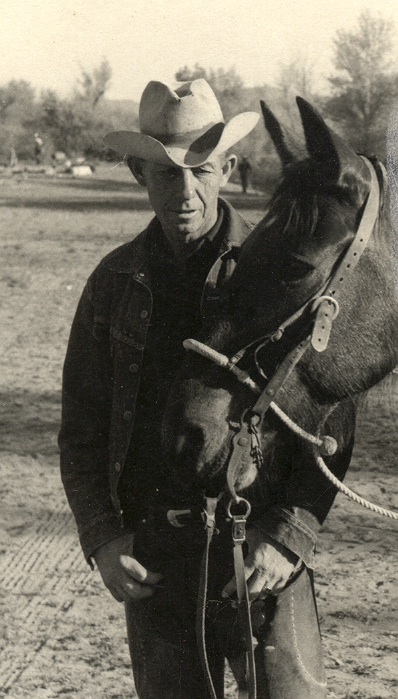
My father was a tidy man. He kept his tools in order. Bridles for the horses hung neatly from the proper pegs. He oiled his saddle regularly. Yes, Daddy was a cowboy. During his lifetime, cattle ranching in the Arizona desert wasn't easy. The droughts were long. The rains came rarely. He was no stranger to harsh scarcity. He also was no stranger to boundless joy.
I learned a lot from my father: How to sense the coming rain hours before its arrival. How to cool a branding iron in the sand. How to treat all people with equal respect whether they were convicted felons on parole or United States Senators on the campaign trail. I also learned from him that exuberance can sometimes get messy and that the mess is really okay as long as you eventually clean it up.
It was a particularly hot summer day when Daddy announced that he and I were going to the foot of Yarnell Hill to buy a lug of peaches. Apparently we were going to surprise my mother by bringing peaches home for her to can. I would later learn that a lug of peaches adds up to quite a few pieces of fruit weighing a lot. We would later that day arrive home with more than a lug or two. My father sometimes had trouble putting on the brakes literally and metaphorically.
I don't care for peaches. The taste is heavenly but not worth dealing with the skin's fuzz which leaves me feeling itchy and crawly and altogether regretting that I ever considered eating the peach. Thus I was not thrilled by the news of our outing. Nevertheless he and I climbed into the old Jeep Willys to drive miles on a dirt road swallowing dust to arrive at a paved road to finally wind up on another dirt road, which eventually led us to the grove of peach trees at the foot of Yarnell Hill. A primary challenge to this journey was the fact that the Jeep had no brakes which gave concrete affirmation to my father's previously mentioned challenge with brakes. He was expert, though, at downshifting to brake the Jeep and our arrival at the orchard was without incident.
I hadn't realized that we had to pick the peaches ourselves and thus had nothing to protect my hands from the dreaded fuzz. My father's exuberance over the peach project did little to improve my mood. I felt miserable. My skin seemed alive with the itchy awful fuzz. I hated every peach I picked. Daddy, on the other hand, smiled and laughed and sang with pure delight. When he declared that one lug wasn't nearly enough my heart sank. Nevertheless, I dragged my bucket behind me and we trudged deeper and deeper into the grove until finally, with what seemed to me an obscene amount of peaches, he declared the job done.
We lugged our lugs to the front of the grove where Daddy carefully counted out the correct change. I suspected that the price of the peaches ate up most of the week's budget for food but Daddy didn't seem to care. He just wanted to take the peaches home to his wife - to my mother.
Once back at the Jeep we safely settled the peaches in back of us and climbed into the roofless, brakeless, worn out Army surplus Willys to get situated between the sprung springs ready for the ride home.
For a moment Daddy seemed lost in thought.
Then he jumped out of the Jeep and, laughing, said, "She won't miss just one peach."
In the moments that followed I saw joy as I had never seen it before and have never seen it since. My father took a peach in his hand, studied it for just a moment and then bit in. Juice ran down his chin and onto his shirt. Juice ran onto his hands, under the cuffs of his shirtsleeves, and down his arms. He gloried in the taste of the peach and did not pause until only the pit remained. Finally he placed the pit back in the box with the other peaches as though he needed proof that the peach had existed.
There was no water available for him to wash. He said he'd deal with that later. For him, the joy was worth the mess. He took his handkerchief from his pocket and tidied up as best he could and then, still smiling, got back in the Jeep.
By the time we got back home his hands and face were caked from the dust that had stuck to his peach juice sticky skin. Still happy beyond description, he carried the peaches into the house. My mother was thrilled with the peaches, with her husband's contagious joy and, also, by the fact that her surly daughter seemed almost happy.

2014-10-08-CowboywithHorse.jpg